10 Common Meta Ads Mistakes (and how to fix them before you waste budget)
Meta Ads still work in 2026, but poor setup, weak creative, and outdated strategies continue to waste thousands in ad spend. Discover 10 common Meta Ads mistakes businesses make and how to fix them before your budget disappears.

Running Meta Ads can still be one of the fastest ways to grow a business in 2026. Whether you’re generating leads, selling products, or driving bookings, Meta gives brands access to billions of users across Facebook and Instagram. But while Meta Ads can scale quickly, they can also burn through budget just as fast when campaigns are poorly structured.
One of the biggest problems businesses face is assuming Meta’s AI will do all the hard work for them. In reality, successful campaigns still rely on strong creative, accurate tracking, smart targeting, and consistent testing. Small mistakes in setup can quietly damage performance for weeks before anyone notices.
Here are 10 of the most common Meta Ads mistakes we still see businesses making and how to fix them before they waste more of your ad spend.
1. Treating Advantage+ like a “set and forget” tool
Meta continues pushing Advantage+ campaigns heavily, and while they can perform well, too many advertisers rely on them entirely.
The issue is that automation without strategy rarely works long term. Campaigns often start strong, then performance drops because there’s no ongoing testing or optimisation behind them.
How to fix it:
Use Advantage+ alongside manual testing campaigns
Regularly refresh creative assets
Feed Meta high-quality first-party data
Review placement and creative breakdowns weekly
Meta’s AI works best when it has good signals and strong creative to learn from.
2. Optimising for the wrong objective
One of the quickest ways to waste your budget is by optimising for surface-level metrics like views, likes, and impressions that don’t translate into real business results.
A surprising number of businesses still optimise campaigns for link clicks or landing page views instead of actual conversions. That usually means Meta delivers ads to people most likely to click, not people most likely to buy.
How to fix it:
Use “Purchase” for ecommerce campaigns
Use qualified lead events for lead generation
Set up Conversions API (CAPI) correctly
Test event tracking regularly inside Events Manager
The better your conversion signals, the smarter Meta’s delivery becomes.
3. Poor creative that doesn’t stop the scroll
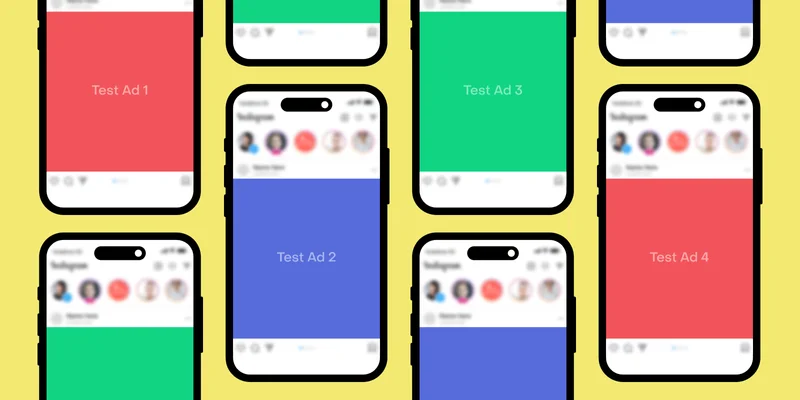
As creative fatigue is one of the biggest reasons Meta campaigns stall, most high-performing accounts now focus more on creative testing than audience testing.
Users are seeing thousands of ads every week, so generic stock imagery and overdesigned graphics simply don’t cut through anymore. Short-form video, UGC-style content, and authentic creative now consistently outperform polished corporate ads.
How to fix it:
Prioritise short-form video content
Use real people wherever possible
Add captions and on-screen text
Design mobile-first creative formats
Refresh creatives regularly
4. Ignoring the learning phase
Many advertisers panic too early. But remember, consistency usually outperforms reactive management.
Meta’s algorithm needs time and conversion data to optimise delivery properly. Constantly editing campaigns resets learning and creates unstable performance. How to fix it:
Avoid major edits during the first 5–7 days
Don’t make daily budget changes
Consolidate ad sets instead of over-segmenting
Wait for statistically meaningful data before making decisions
5. Overcomplicating audience targeting
There was a time when hyper-specific targeting was the standard. That’s changed significantly.
Meta’s AI now performs best when it has enough data and audience size to optimise effectively. Using broader audiences, alongside strong conversion data and good creative, gives the algorithm more flexibility to find the right people. Whereas over-segmenting audiences can limit that flexibility, restrict delivery, and increase CPMs unnecessarily.
How to fix it:
Test broader audiences alongside interest targeting
Focus more heavily on creative and messaging
Use lookalike audiences from high-quality customer data
Remove unnecessary audience layering
In many cases, simpler account structures now outperform complicated setups.
6. Neglecting retargeting campaigns
Most users won’t convert after their first interaction with your brand.
If your campaigns only target cold audiences (people who haven’t engaged with your business before) you’re likely missing out on conversions from warmer audiences who already know your brand.
Retargeting engaged users remains one of the highest ROI areas of Meta advertising when structured properly.
How to fix it:
Build a simple retargeting funnel:
Re-engage website visitors
Show testimonials or social proof
Introduce urgency or offers
You can also retarget:
Instagram engagement
Video viewers
Email subscribers
Existing customer lists
Warm audiences usually convert significantly cheaper than cold traffic.
7. Sending traffic to weak landing pages
Even great ads fail if the post-click experience is poor. Therefore, your ad and landing page should feel like one consistent journey.
A slow website, unclear messaging, or confusing user journey can destroy conversion rates and increase acquisition costs. Many businesses blame Meta performance when the real issue sits on the landing page.
How to fix it:
Improve mobile load speeds
Match landing page messaging to ad copy
Use one clear Call To Action (CTA)
Reduce unnecessary form fields
Add trust signals like reviews and testimonials
8. Not testing enough creative
Winning Meta accounts rarely rely on one or two ads.Therefore, creative testing should be an ongoing process, not a one-off task.
The brands seeing the strongest results are constantly testing new hooks, formats, headlines, and visuals. Creative volume has become one of the biggest performance drivers on the platform.
How to fix it:
Test new creatives every week
Trial different hooks in the first 3 seconds
Repurpose organic social content into ads
Track performance trends carefully
Retire fatigued ads before performance drops heavily
Make creative testing business as usual to keep your ads up to date.
9. Relying too heavily on AI-generated creative
AI tools are becoming more common inside Meta Ads, but fully automated creative still creates issues for many advertisers.
Some brands have experienced off-brand visuals, inconsistent messaging, and strange AI-generated assets damaging campaign performance.
How to fix it:
Use AI tools to support ideation, not replace strategy
Keep human oversight on all creative
Maintain clear brand guidelines
Review automated creative carefully before scaling
Automation can improve efficiency, but strong creative direction and human input make the real difference.
10. Focusing only on ads Instead of the full funnel
Meta Ads don’t operate in isolation. Paid social works best as part of a wider growth strategy.
If your offer is weak, your follow-up process is slow, or your wider customer journey is broken, ads alone won’t fix the problem. The highest-performing campaigns are usually supported by strong CRM systems, email flows, landing pages, and sales processes.
How to fix it:
Align ad messaging with sales messaging
Track lead quality, not just lead volume
Improve email nurturing sequences
Review your entire customer journey regularly
Final Thoughts
Meta Ads are still one of the most effective digital marketing channels available, but success now depends far more on structure, creative quality, and data than quick hacks or outdated tactics.
The brands getting the best results are the ones consistently testing ads, simplifying accounts, improving creative, and focusing on the full customer journey rather than just vanity metrics like clicks and impressions.
If your Meta Ads performance has dropped recently, it’s rarely just “the algorithm”. More often, it’s a combination of creative fatigue, weak data signals, poor optimisation, or inconsistent strategy.
At Driven By Digital, we help brands build Meta Ads strategies that actually scale sustainably — without wasting budget on the wrong setup.
